
WATER HEATER INSTALLATION SERVICES
Fast, Reliable Tankless Water Heater Installation Service
in Chicago
Licensed & insured — we handle permits and warranty paperwork for every installation.
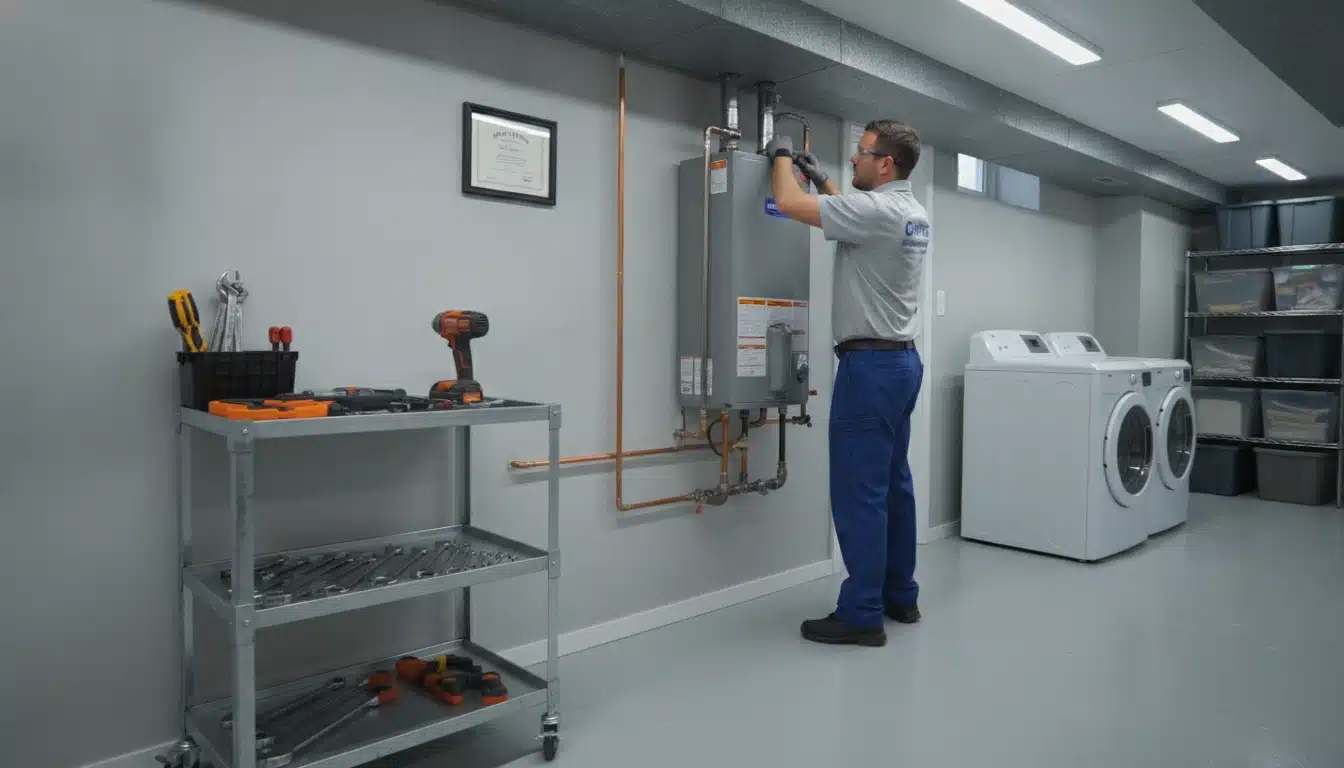
Your home’s hot water depends on a properly installed water heater. When it’s time for a replacement or a new water heater, choosing a licensed team means reliable hot water, safe connections, and valid manufacturer warranties. Chicago Water Heater — operated by J Sewer & Drain Plumbing Inc. — is a family-owned local plumbing partner serving Chicago homeowners since 2017.
We combine two generations of plumbing experience with modern techniques to install, replace, and service electric and gas units. Whether you need an electric water heater, a tank replacement, or urgent hot water restoration, our technicians handle the job safely and efficiently so your home has dependable hot water and minimal downtime.
Ready for Expert Water Heater Installation?
Call now for same-day estimates and free on-site inspections. Our team is available 24/7 for emergencies and scheduled installs — quick, professional service that protects your home and your warranty.
Why Professional Water Heater Installation Matters
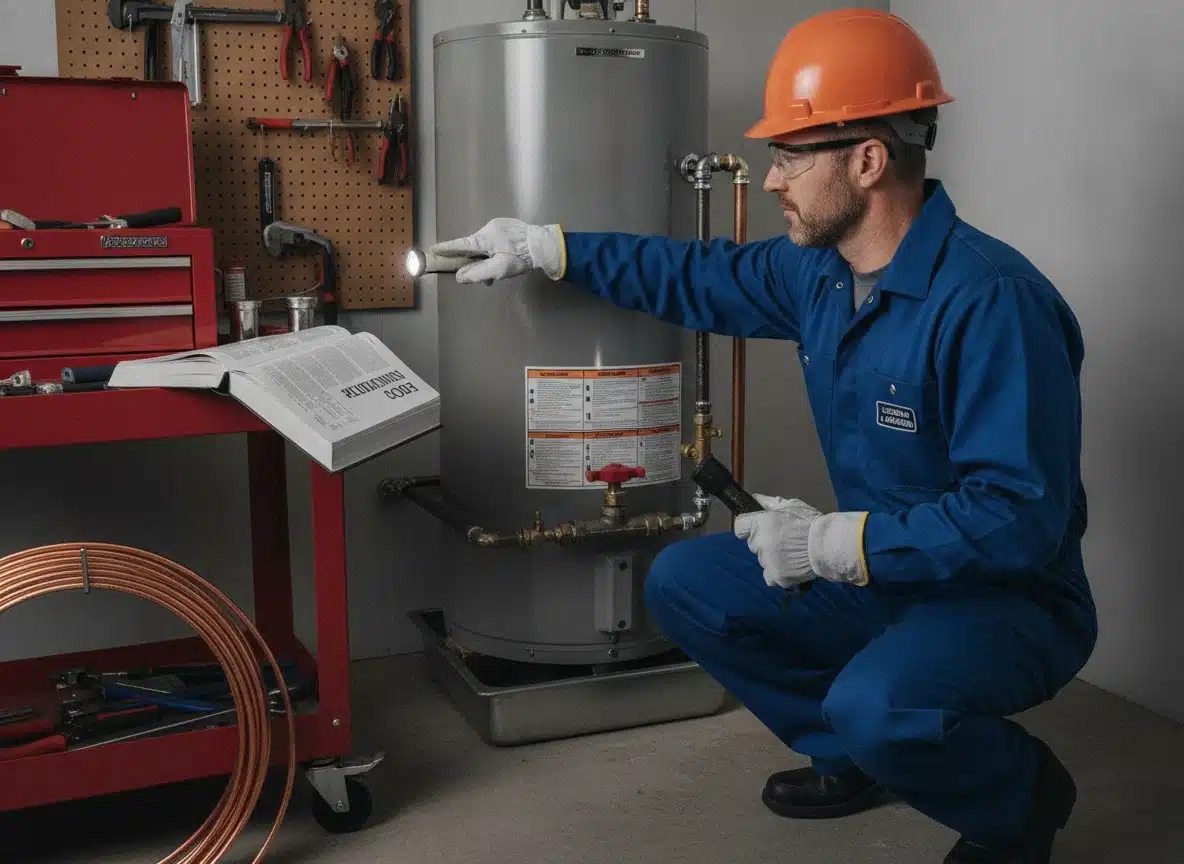
Water heater installation is more than hooking up water lines and restoring power. Proper heater installation protects your home from leaks, electrical faults, and combustion hazards while preserving manufacturer warranties and long-term performance. Our licensed plumbers understand local codes and use trained procedures to keep your family and property safe.
Chicago has specific building codes and permit requirements for water heaters—venting, drain pans, discharge piping, and clearances all matter. We stay up to date on those codes and pull necessary permits so your installation passes inspection and your warranty remains valid.
Safety risks from improper installation include gas leaks, carbon monoxide exposure, electrical fires, and water damage. Our technicians follow strict safety checks—testing gas lines, verifying circuit breaker sizing, and confirming correct discharge pipe routing—to eliminate those risks before we leave your home.
The Hidden Costs of DIY Installation
- Warranty void: Many manufacturers require professional installation for coverage—DIY work can cancel parts or labor protection.
- Permit & resale risk: Unpermitted work can surface during a home sale and lead to costly corrections or deal delays.
- Time & error costs: What pros do in 3–4 hours can take a homeowner a weekend; mistakes often turn into expensive repairs.
Example: a small gas-line error or missed leak can cause thousands in repair and water-remediation costs—far exceeding the price of professional installation and the protection it provides.
Professional Installation Protections
Choosing a licensed plumbing team gives you built-in protections: liability insurance for accidental damage, a workmanship warranty for the installation itself, and properly completed documentation to keep manufacturer warranties valid. If a problem stems from our installation, we return to fix it at no extra charge.
Do you need a permit? Usually yes—we handle permit applications and inspections so you don’t have to worry about code compliance or inspection delays.
Professional Installation Protections
Don't Risk Your Home's Safety
Protect your family, your home, and your warranty with licensed, insured professionals. Contact Chicago Water Heater for safe, code-compliant heater installation and documented workmanship.
Types of Water Heaters We Install
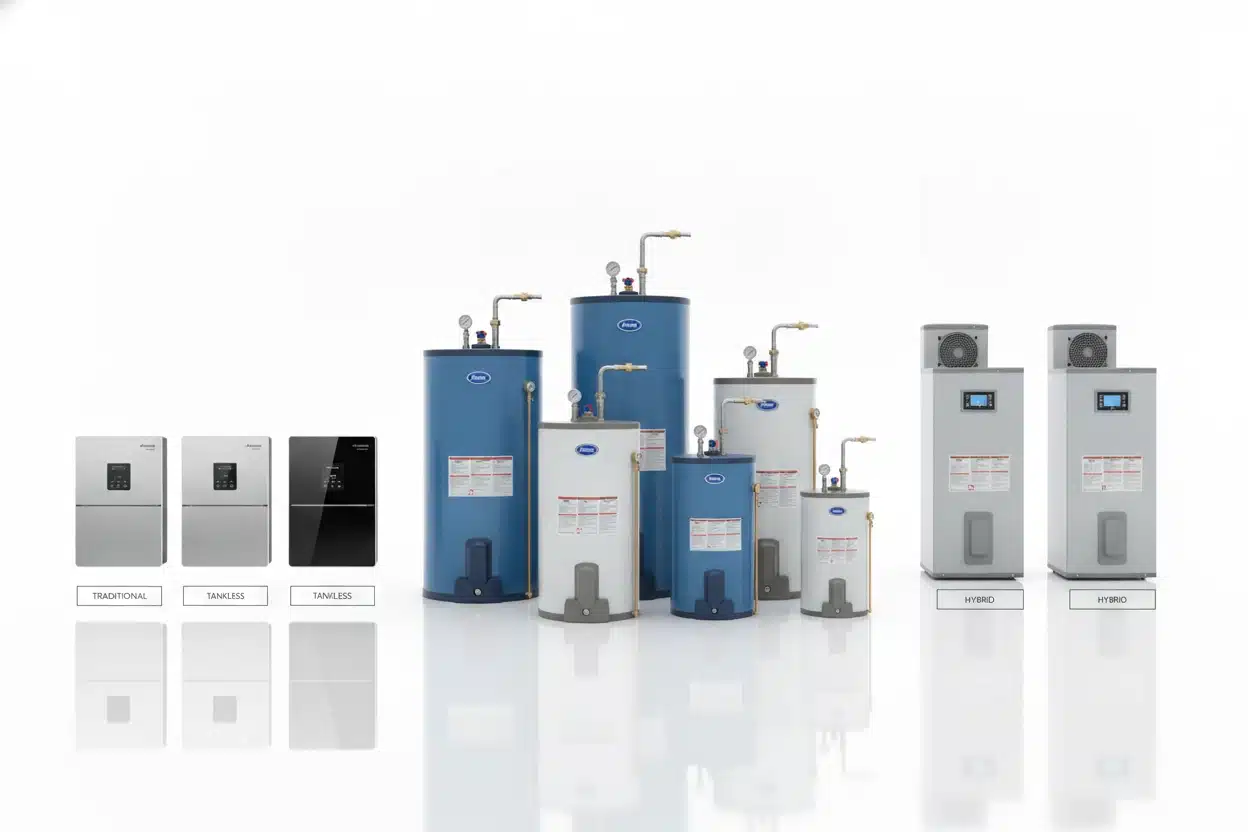
Choosing the right water heater affects your home’s energy use, hot water availability, and long-term costs. We install all major water heaters — from traditional tanks to tankless, hybrid heat pump models, and commercial systems — and recommend the best option for your household, space, and budget.
Traditional Tank Water Heaters
Tank water heaters store hot water so it’s ready when you need it. Common residential tank sizes range from about 30 to 80 gallons, making them a flexible choice for many homes.
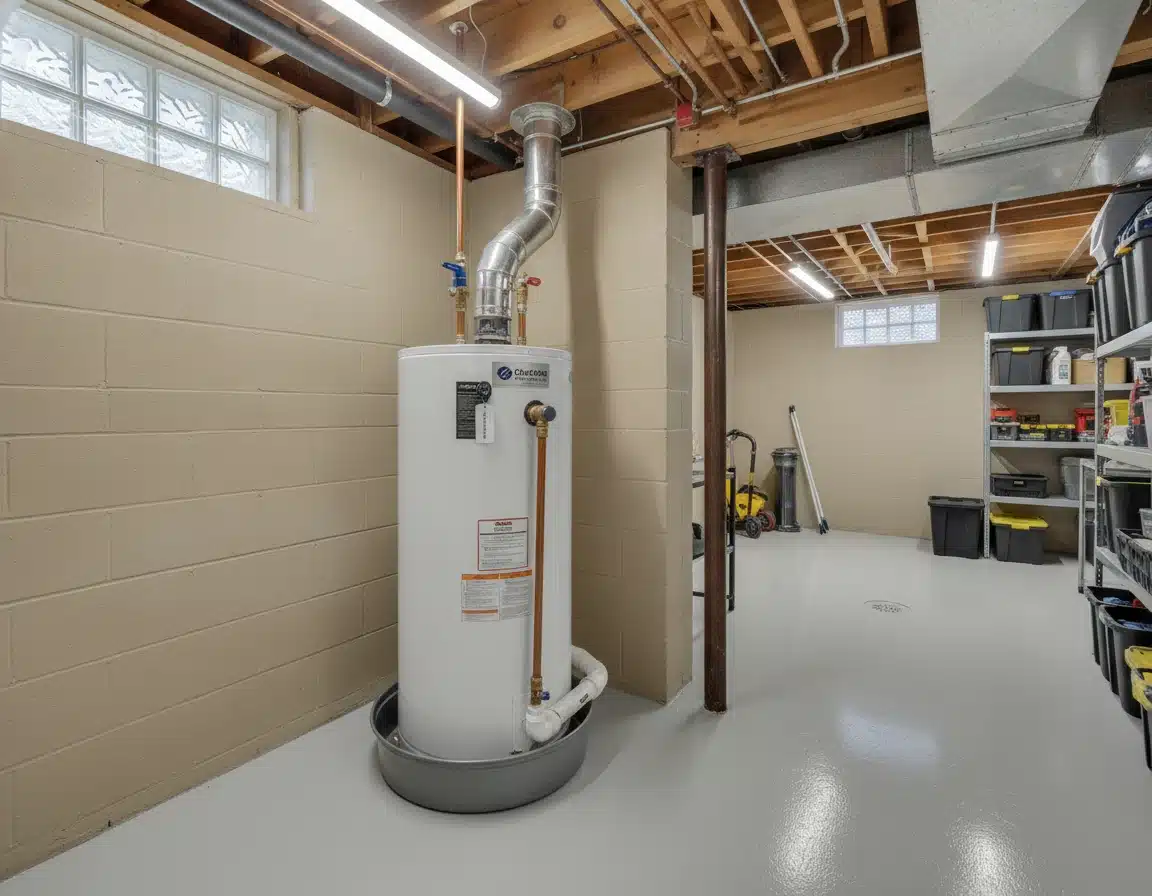
Who it’s best for: budgets looking for lower upfront cost and straightforward installation.
Pros: lower purchase price, simple replacement, reliable supply for typical households.
Cons: standby heat loss, larger footprint, typical lifespan 10–15 years with proper maintenance.
Typical cost range: $400–$800 for the unit; total installed price often in the $900–$1,800 range depending on labor and permits.
Electric water heaters are a common tank option when gas isn’t available — they’re easier to install but require proper circuit breaker sizing and adequate electrical capacity. Gas tank models heat faster and can run during power outages but need correct venting and combustion air.
Tankless (On-Demand) Water Heaters
Tankless units heat water only when you open a hot water faucet, delivering near-continuous hot water and saving space by mounting on a wall.
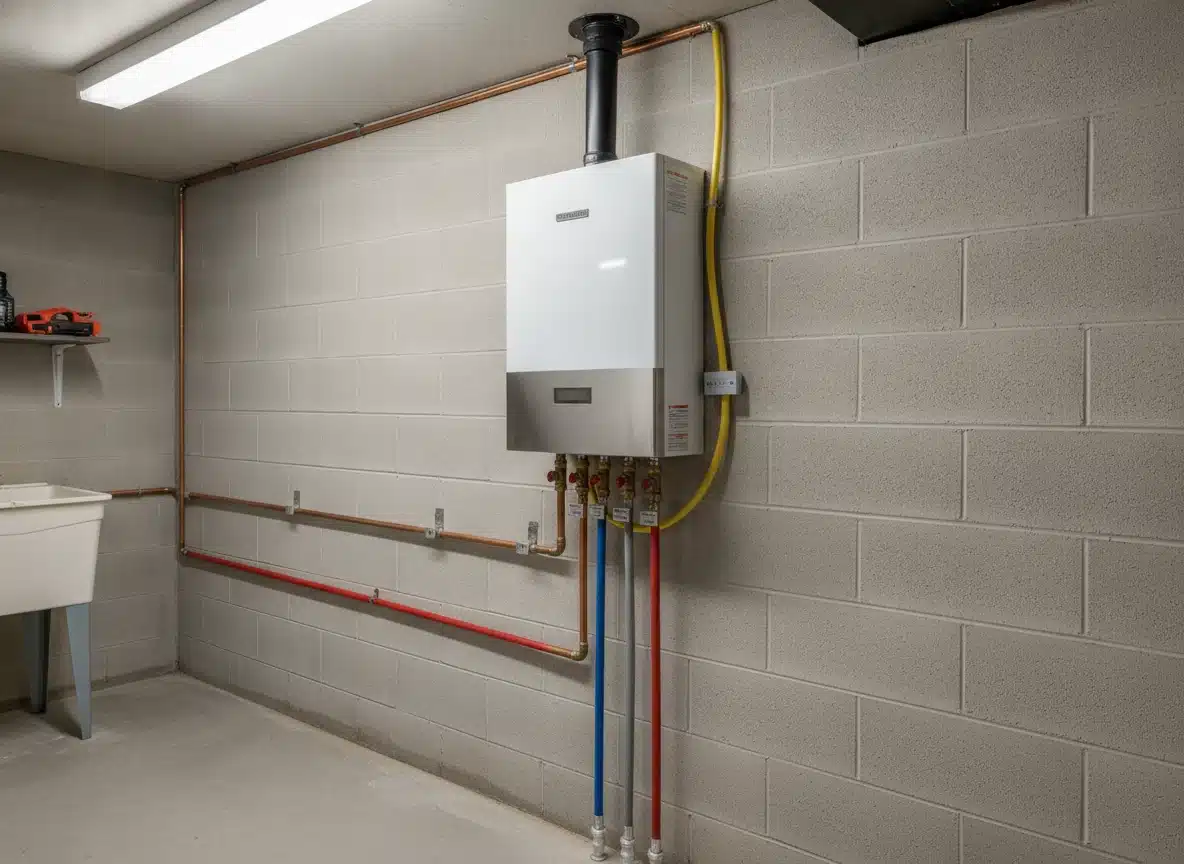
Who it’s best for: households wanting energy savings, space savings, or endless hot water for showers and appliances.
Pros: eliminates standby heat loss, compact, longer lifespan (often 20 years+), potential 20–30% energy savings depending on usage patterns.
Cons: higher upfront equipment cost ($1,000–$3,000+), may require gas line upsizing or electrical service upgrades in Chicago homes.
Installation note: tankless installations can need upgraded gas lines or a higher-capacity electrical circuit — expect extra costs when infrastructure changes are required.
Tankless units work by passing cold water through a heat exchanger and rapidly raising the temperature on demand, delivering hot water to your fixtures almost instantly. For large homes, multiple units or higher-capacity models can be combined.
Hybrid & Heat Pump Water Heaters
Hybrid models combine a small tank with heat pump technology to extract heat from the surrounding air and transfer it to the water, offering significantly higher efficiency for electric systems.
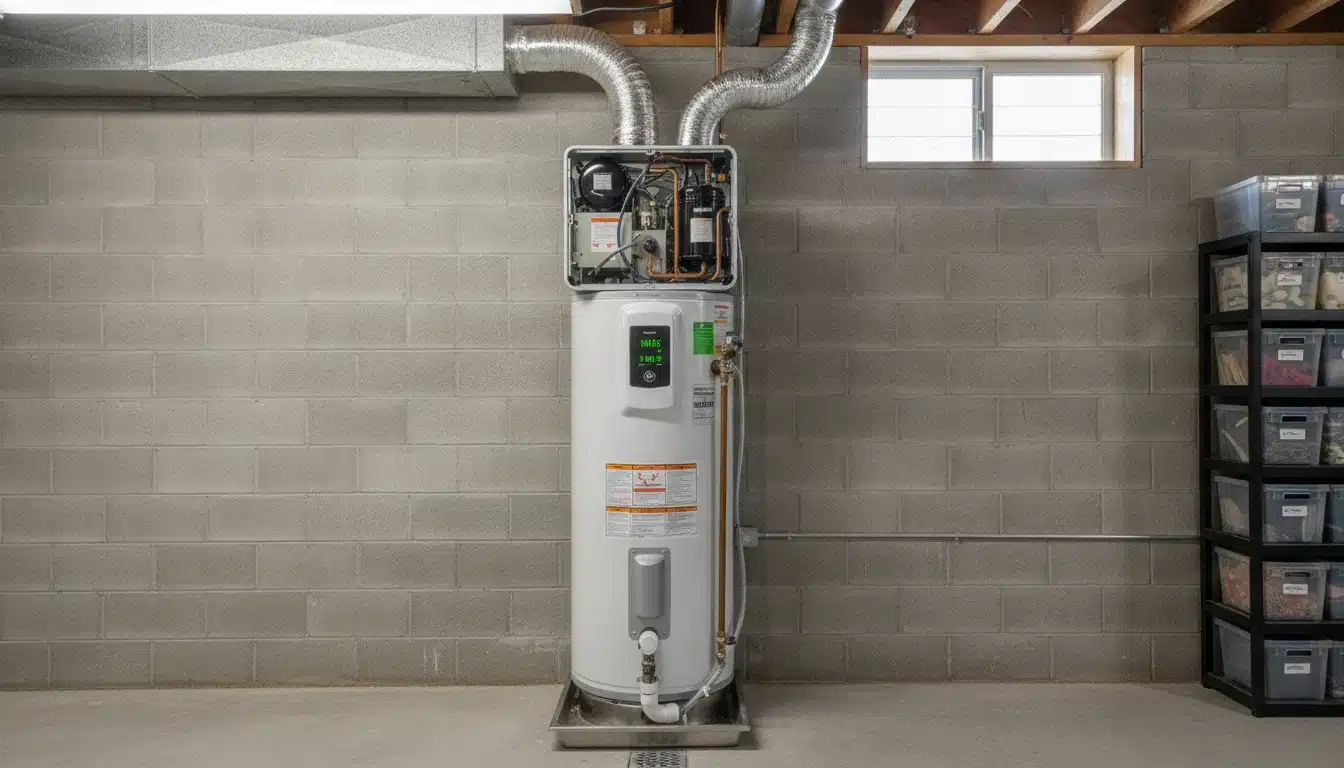
Who it’s best for: homeowners seeking the highest electric efficiency and lower operating costs over time.
Pros: 2–3x the efficiency of standard electric units, lower operating bills.
Cons: higher upfront price, requires space with adequate airflow and moderate ambient temperature.
Commercial & High-Capacity Systems
For multi-family buildings, restaurants, or facilities with heavy hot water demand, we install commercial-grade tank and tankless systems designed for continuous, high-volume use.
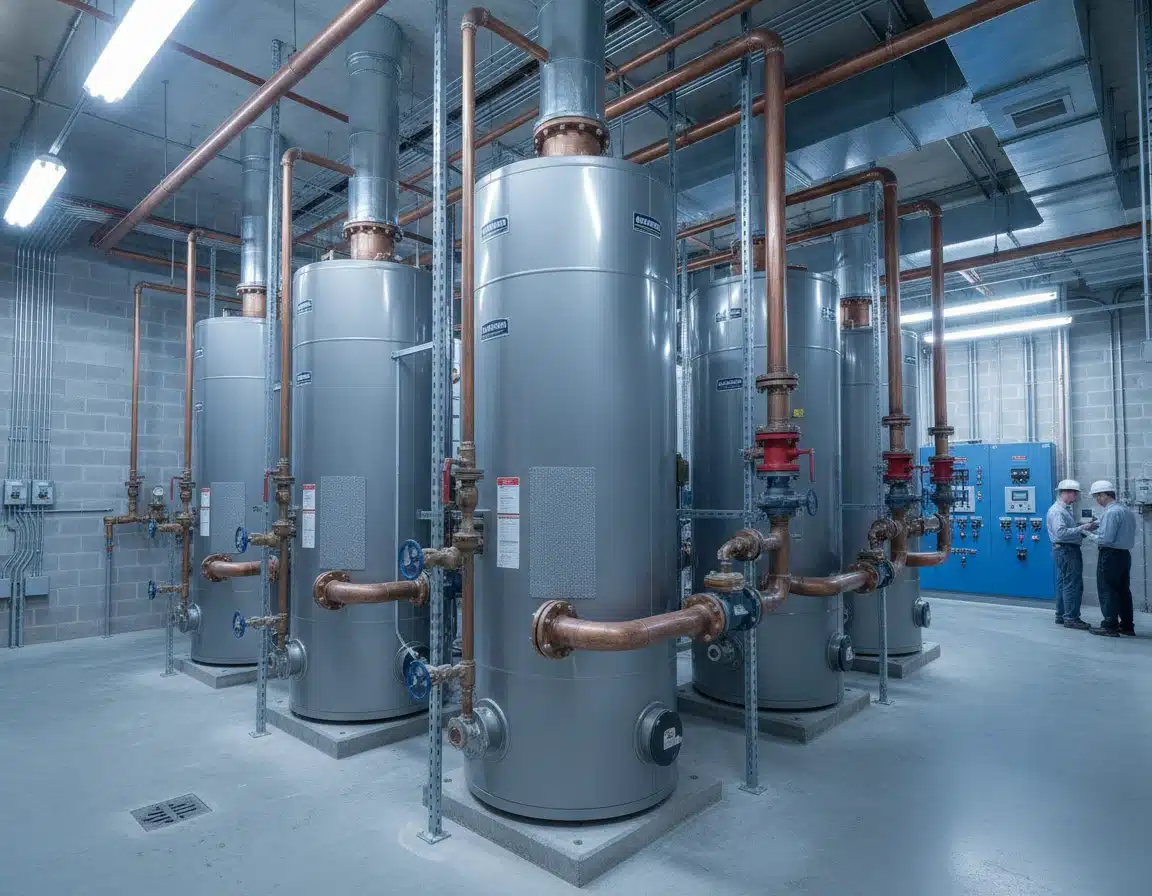
Proper sizing is critical: we calculate demand using occupancy, fixture count, and peak usage patterns to avoid undersized systems that run out of hot water or oversized units that waste energy
Quick Comparison & Next Steps
Tank: lower upfront cost, good for standard homes; maintenance (annual flushing) extends life.
Tankless: best for efficiency and space savings; watch for gas/electrical upgrade costs.
Hybrid/Heat Pump: excellent long-term energy savings for suitable spaces.
Want help choosing? We offer in-home assessments to check your water supply, gas/electrical capacity, and space constraints — then provide a clear recommendation and itemized quote. See our installation and maintenance sections for details on conversion steps and upkeep.
Our Water Heater Installation Process
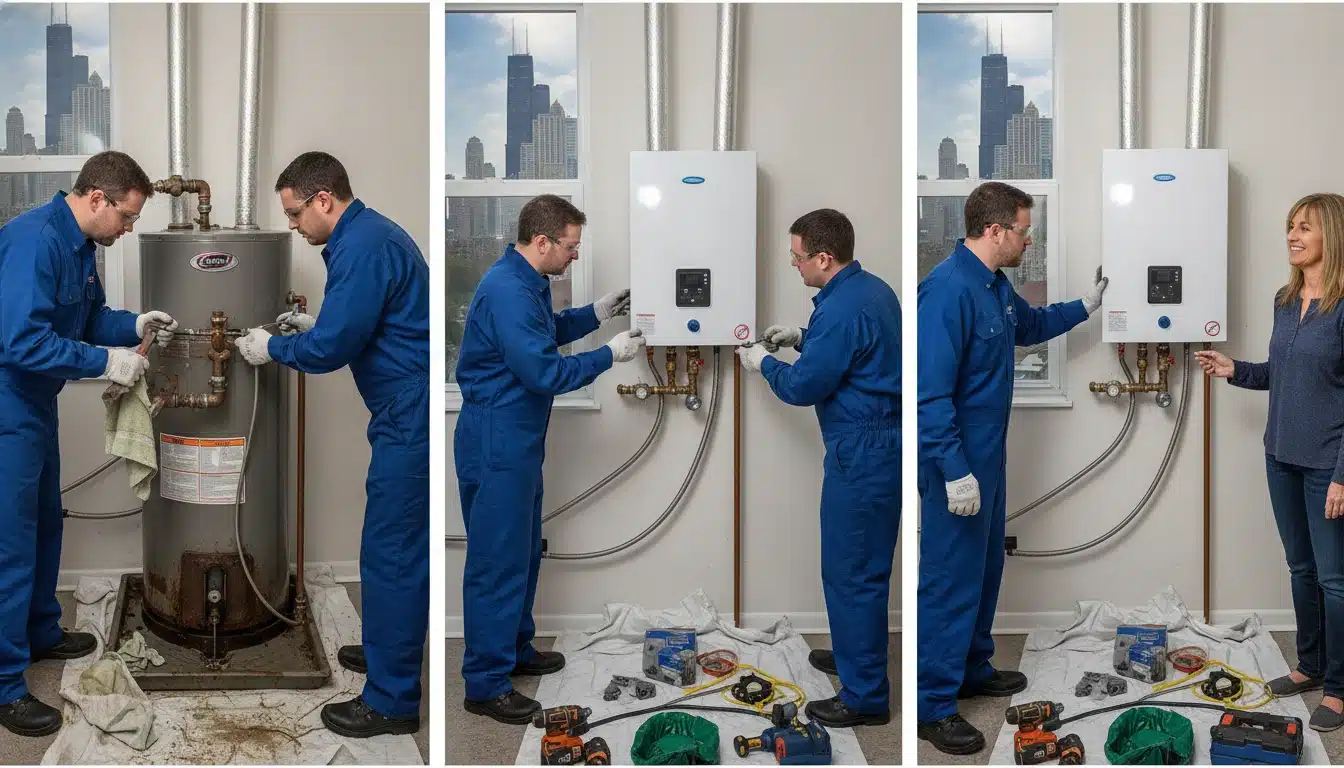
We follow a clear, six-step installation process so you know exactly what to expect. Our systematic approach delivers safe, code-compliant results while minimizing disruption to your home. Below is a concise guide to each step, typical durations, homeowner actions, and what our technicians provide.
Step One: Initial Assessment and Planning
What to expect: 30–60 minutes on-site assessment.
We inspect your existing setup—fuel type, tank size, venting, and access—to recommend the right heater and capacity for your household.
We review hot water demand (showers, appliances, simultaneous usage) to right-size your new water heater and confirm the First Hour Rating or tankless flow needs.
We check access routes and measure clearances so the new unit and all fittings will fit through doors and into place without surprises.
Homeowner action: Point out garage panels, utility shut-offs, and any space preferences; provide information on past service or known issues.
We provide: an itemized estimate, permit handling if required, and a suggested timeline for installation.
Step Two: Removing the Old Water Heater
What to expect: 45–90 minutes depending on access and tank size.
We shut off the cold water supply and open a hot water faucet to relieve pressure, then shut the power (turn off the circuit breaker for electric heaters) or the gas valve for gas models.
The tank is drained via a hose to a floor drain or outside. Sediment makes older tanks heavy—our crews handle safe removal and transport.
All water lines, gas lines, and electrical wires are disconnected and capped or isolated to code.
Environmental note: We recycle your old heater where possible and handle responsible disposal.
Step Three: Preparing the Installation Site
What to expect: 20–60 minutes; longer if repairs or upgrades needed.
We inspect the area for water damage, corrosion, or structural problems and recommend repairs before installation to avoid future leaks or failures.
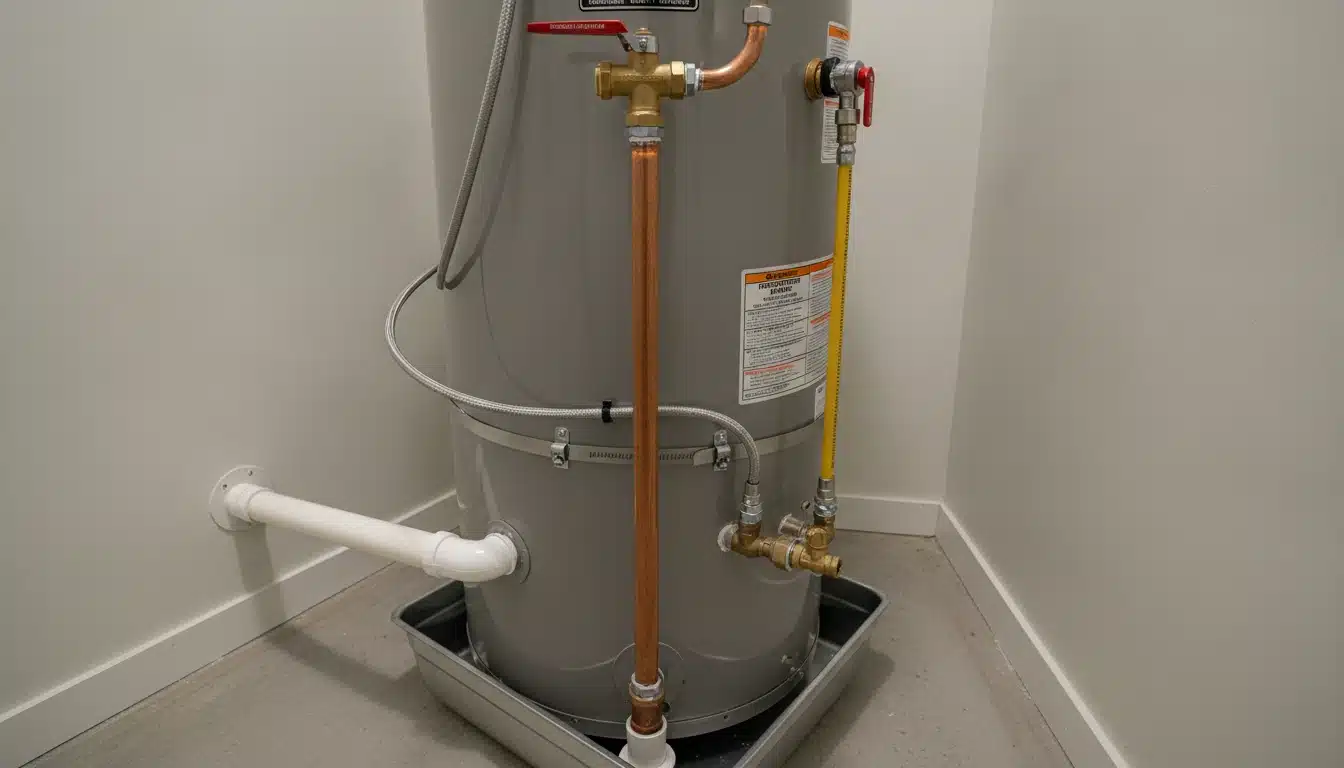
We verify code-required clearances, combustion air, and venting paths. For tank models, we install a drain pan when the code or placement requires it and route the pan drain to a safe location.
If water lines, gas lines, or electrical capacity need upgrading, we outline the scope and cost. Common modifications include new shut-off valves, dielectric unions, or supply line replacements.
Homeowner action: Clear the area and move any stored items; inform us of special access concerns (narrow stairs, tight hallways).
Step Four: Installing the New Water Heater
What to expect: 2–5 hours depending on type (tank-to-tank is quickest; tankless or conversions take longer).
We position the new heater securely—tank units on a solid surface or platform, tankless units mounted to the wall with appropriate anchors.
Cold water and hot water connections are made with correct fittings; we use dielectric unions to prevent galvanic corrosion and high-quality pipe fittings to avoid leaks.
Electric models: We connect wires using the correct gauge and tie into the proper circuit breaker, testing voltage and connections before power-up.
Gas models: We connect the gas supply with approved fittings, route venting per code, and test all gas connections with a leak solution.
The temperature pressure relief (TPR) valve and discharge pipe are installed per code: the discharge must run continuously downward and terminate where it won’t cause injury or damage.
Common variations: Converting tank to tankless may require gas-line upsizing ($300–$1,200 typical) or electrical service upgrades ($500–$2,000). We include these items in the estimate when needed.
Step Five: System Testing and Quality Checks
What to expect: 30–60 minutes for full testing.
We fill the tank slowly (or prime a tankless system), purge air from lines, and verify steady hot water flow at a faucet.
All connections—water lines, fittings, and gas lines—receive thorough leak checks. We watch for moisture and re-torque fittings where necessary.
For electric units, we restore power at the circuit breaker and confirm heating element operation and thermostat performance.
For gas units, we light pilots per manufacturer instructions and confirm proper burner ignition and flame characteristics.
We test the TPR valve to ensure it opens and reseals correctly; defective valves are replaced immediately for safety.
Safety tip: We recommend setting the thermostat to 120°F to balance scald risk and energy efficiency.
Step Six: Customer Education and Documentation
What to expect: 10–20 minutes of walkthrough and handover.
We walk you through operation: how to adjust temperature, where emergency shut-offs are, and simple maintenance tasks (like how to check the drain valve).
You receive manufacturer warranty papers, installation records, and any permit/inspection documentation. We can register the product to activate warranties when required.
We explain recommended maintenance intervals—annual flushing for tank units, regular descaling for tankless systems—and offer maintenance plans to keep your heater efficient and long-lived.
We clean the work area and leave you with contact info and next-step recommendations if future upgrades are advised.
Quick case examples: A straight tank-to-tank swap often completes in 3–4 hours with minimal extras. A tank-to-tankless conversion typically takes 5–8 hours and may include gas or electrical upgrades that increase cost and time.
Ready to Schedule Your Installation?
We handle permits, upgrades, and warranty paperwork. Call us for a free in-home assessment and an itemized installation estimate tailored to your home.
Signs You Need Water Heater Installation
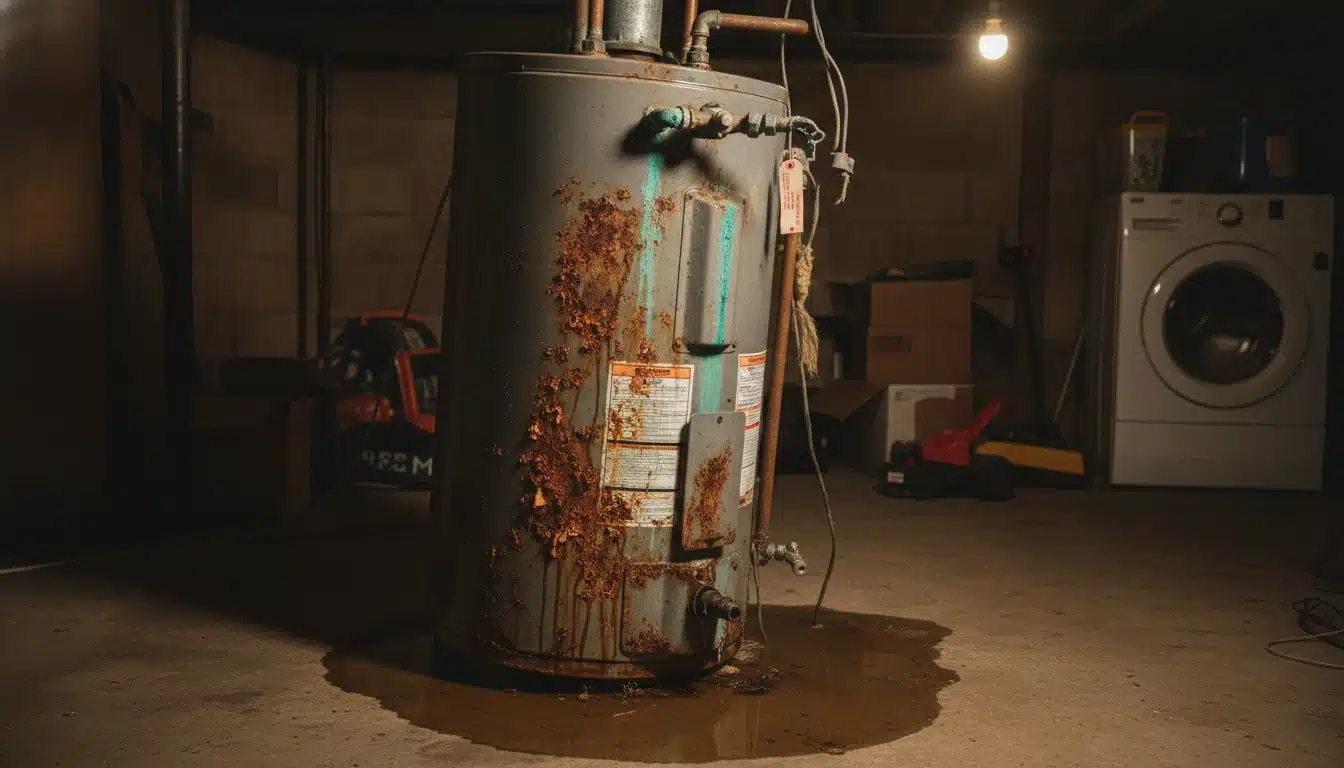
Catching water heater problems early saves money and prevents emergencies. If you see any of the warning signs below, schedule an inspection — some issues mean immediate replacement is the safest option.
Age of Your Current Unit
Why it matters: Most tank water heaters last about 10–15 years with proper care; tankless models often run 20 years or more. As units age, failure risk and operating costs rise.
What to do: Check the serial number for manufacture date or ask us to verify age during an assessment. If your unit is older than 10–12 years, consider a proactive replacement to avoid emergency failure.
Rusty or Discolored Water
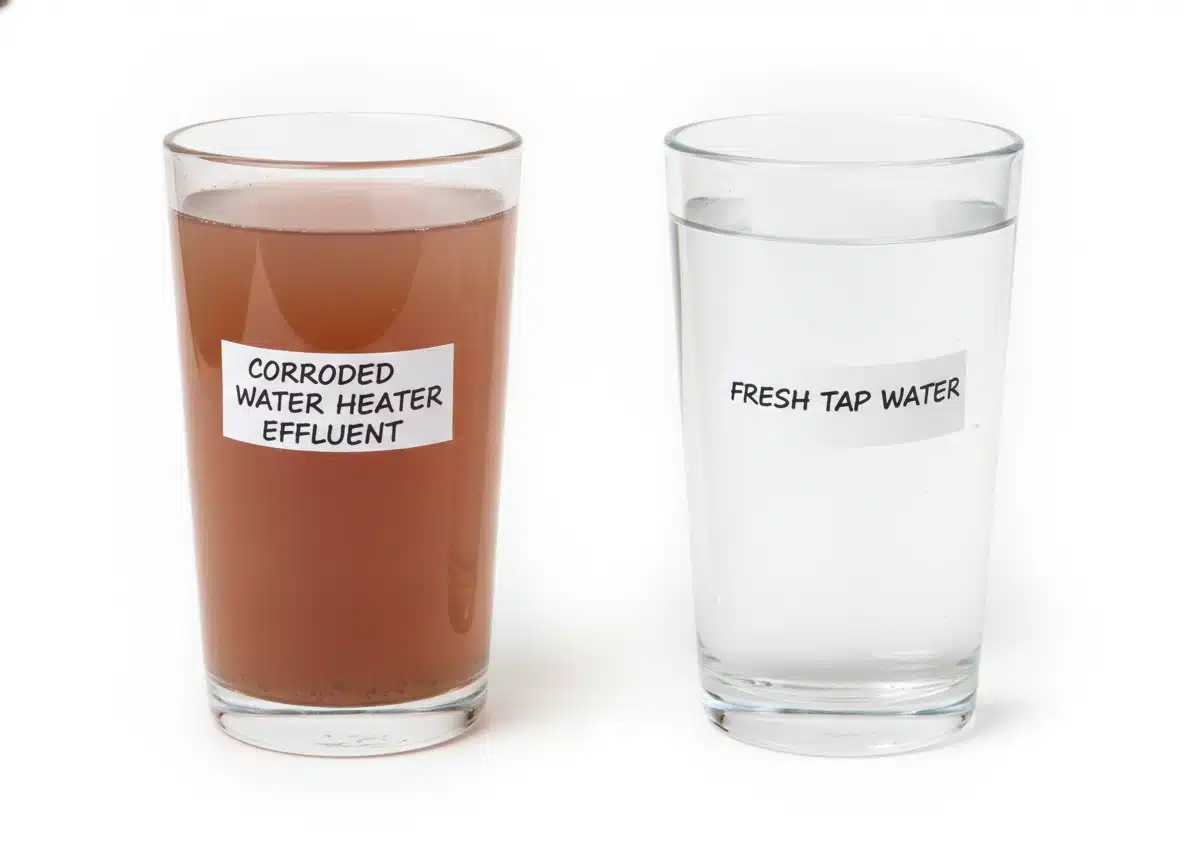
Spot the source: Run cold and hot taps separately. If only hot water is rusty, the tank is likely corroding. If both are discolored, the problem may be in the supply pipes.
Quick fix vs replacement: Replacing anode rods can delay corrosion, but rusted tanks typically require replacement before leaks start.
Strange Noises During Operation
What it signals: Popping, banging, or rumbling usually mean sediment buildup. Sediment reduces efficiency, causes longer heating cycles, and can accelerate tank failure.
Action: Schedule a flushing service. If noises persist or are loud, the tank may already be compromised and replacement should be considered.
Water Pooling Around the Tank
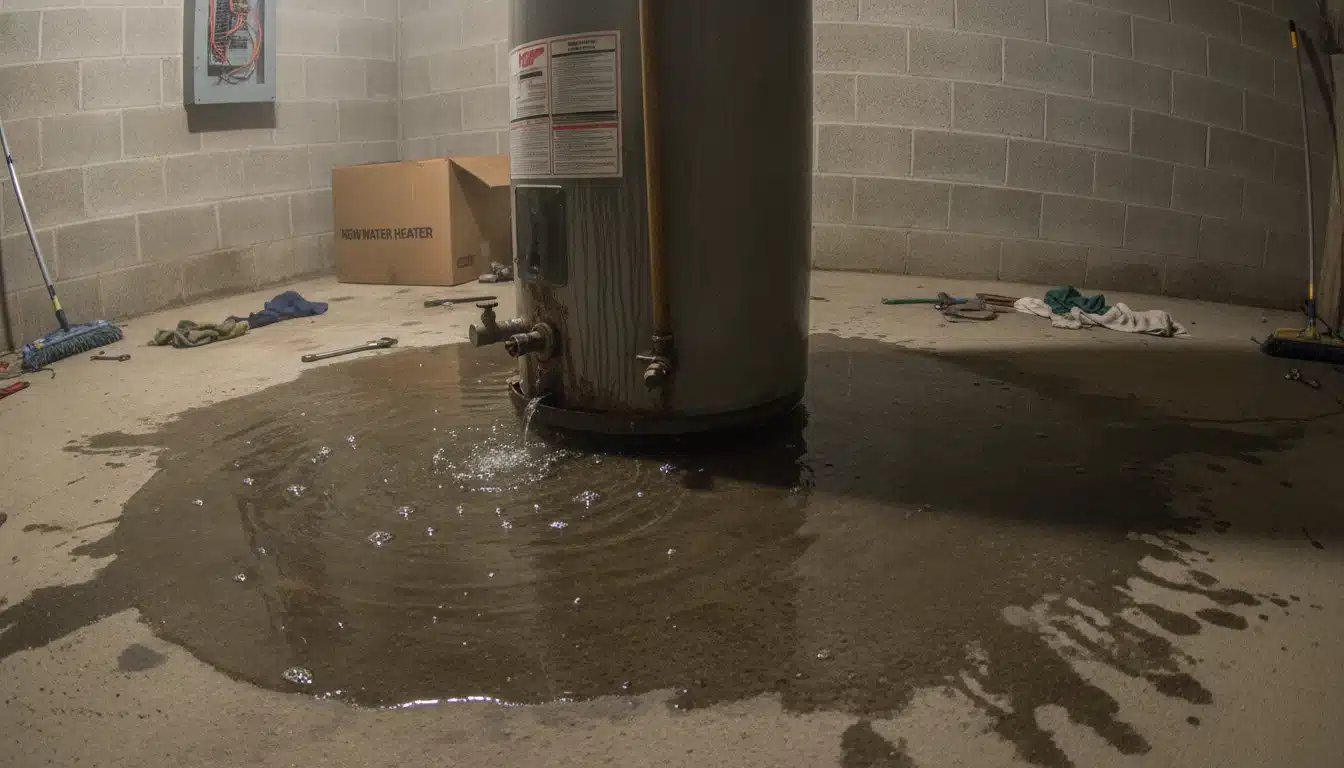
Immediate step: If you see water pooling, shut off the cold water supply and power (turn off the circuit breaker for electric units or close the gas valve for gas units) to limit damage, then call for emergency service.
Why quick action matters: Even small leaks lead to mold, structural damage, and expensive repairs. Leaks from the tank itself cannot be reliably repaired—replacement is the long-term solution.
Inadequate Hot Water Supply
Symptoms: Running out of hot water more often, longer recovery time, or temperature fluctuations can indicate reduced capacity from sediment, failing heating elements, or an undersized unit for current household needs.
Next steps: We’ll diagnose whether repair (heating element replacement, flushing) or replacement (larger tank or tankless upgrade) is the best value for your home.
Rising Energy Bills
Why it happens: Older or sediment-clogged heaters run longer and use more energy. If your bills climb without a change in usage, the water heater may be losing efficiency.
Consider: Upgrading to a new, higher-efficiency model (tankless or heat pump hybrid) often pays back through lower operating costs over time.
Experiencing Water Heater Problems?
Don’t wait for a full failure. For units older than 10 years we offer a complimentary inspection and a clear recommendation: repair, maintenance, or replacement. If you have active leaks, call now.
Choosing the Right Water Heater for Your Home
Selecting the right water heater balances hot water needs, budget, space, and long-term energy costs. We help you evaluate those factors and recommend the best heater type—tank, tankless, hybrid, or commercial—so your household gets reliable hot water without surprises.
Calculating Your Hot Water Needs
Start by estimating peak hour demand. For tank systems, use the First Hour Rating (FHR) — the total gallons of hot water a unit delivers in its busiest hour. For tankless systems, size by required flow rate (gallons per minute, GPM).
- Simple sizing example: Typical fixture flow rates: shower ~2.5 GPM, faucet 1.0–1.5 GPM, dishwasher ~1.5 GPM. Add the GPM of fixtures likely to run simultaneously to size a tankless unit.
- Tank rule of thumb: A family of four commonly uses a 50-gallon tank (FHR and recovery rate still matter).
- We do the math: During your assessment we calculate FHR, flow needs, and recovery to recommend the correct size and reduce the risk of running out of hot water.
Fuel Type Considerations
Your available fuel (natural gas vs. electric) influences options and operating cost. Natural gas usually yields lower energy cost per unit, while electric units have lower initial price and simpler installation when gas isn’t present.
- Electric water heater: straightforward installation for many homes; requires correct circuit breaker and wiring.
- Gas water heater: faster recovery and operation during power outages, but needs proper venting and combustion air.
- Conversion note: Converting from electric to gas (or vice versa) involves additional installation work—gas-line changes or electrical panel upgrades—and we include those costs in our quote.
Space and Location Requirements
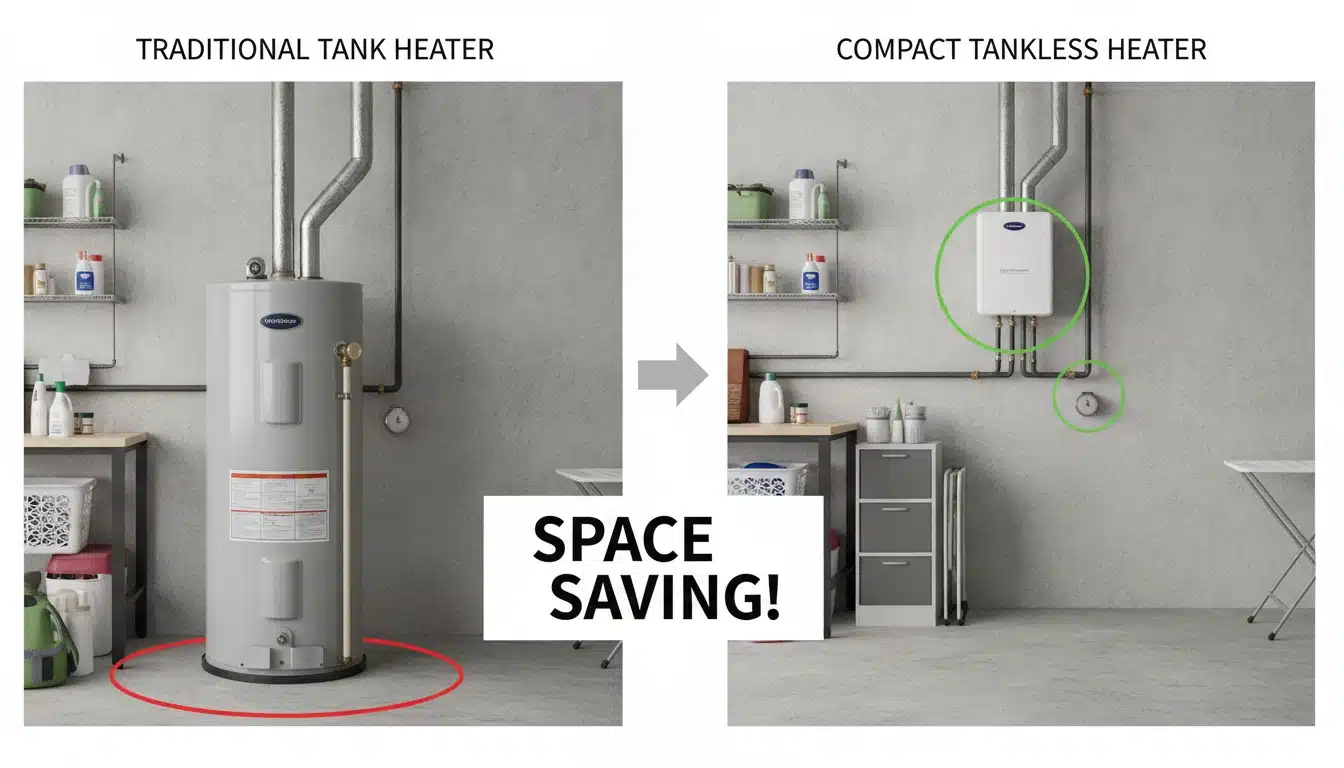
Available space often determines the best choice. Tank units require floor space and clearance; tankless units mount on walls and save floor area but may need ventilation or larger gas/electrical feeds. Closet installations and cold Chicago winters also affect placement—outdoor units are less advisable here.
Energy Efficiency and Long-Term Costs
Compare Energy Factor (EF) or Uniform Energy Factor (UEF) ratings to evaluate efficiency. Tankless and heat pump (hybrid) models typically offer higher efficiency and lower operating costs over time.
Tank: lower upfront cost but standby heat loss.
Tankless: eliminates standby loss; families often see notable savings depending on usage (estimates vary by household).
Heat pump/hybrid: high electric efficiency—best where space and ambient temperatures allow.
Consider total cost of ownership: purchase + installation + energy + maintenance. We provide side-by-side comparisons so you can see payback timelines for more efficient models.
Budget, Rebates, and Financing
Upfront costs vary: basic tank units are least expensive to buy, while tankless and hybrid units cost more initially but save energy long-term. Installation complexity (panel upgrades, gas-line sizing, venting) impacts the total price.
We track local incentives—utility rebates (ComEd, Peoples Gas) and federal tax credits—that can lower the effective cost of high-efficiency models. Ask us for current rebate eligibility during your estimate. Financing options are available to spread costs over time.
Warranty Coverage
Warranty terms vary by model. Basic units may include shorter warranties (e.g., 6 years), while premium models offer longer protection (10–12 years or more). Understand what’s covered: tank only, parts, or parts + labor.
Manufacturer warranties often require professional installation to remain valid. Our licensed installation ensures proper documentation and registration so your warranty stays enforceable.
Quick Decision Guide
Small home or tight budget: standard tank unit — lower upfront cost.
Space-limited or efficiency-focused: tankless or point-of-use units.
Lowest operating cost (if space allows): hybrid/heat pump electric models.
Large household or heavy simultaneous demand: high-capacity tank or multiple tankless units.
Ready to decide? Schedule an in-home assessment — we’ll measure your water supply, evaluate gas and electrical capacity, and provide an itemized recommendation and estimate. See our installation and cost sections for more detail on conversion steps and pricing.
Water Heater Installation Cost Factors
Knowing the drivers behind water heater installation costs helps you budget and compare quotes. Below are the common cost factors, typical price ranges, and a sample scenario to illustrate how estimates add up. These are ballpark figures — we provide a detailed, line-item quote after an in-home assessment.
Equipment Costs
Standard tank units: A basic 40-gallon electric tank typically costs $400–$600; comparable gas tanks commonly range $500–$800.
Tankless units: Because of their technology and higher flow capacities, quality tankless water heaters generally run $1,000–$3,000 or more depending on capacity and features.
Hybrid / heat pump models: Higher upfront cost than standard electric tanks, but much lower operating energy costs over time.
Premium options: Digital controls, Wi‑Fi, and advanced efficiency features increase equipment price but can add convenience and long-term savings.
Labor and Installation
Typical professional installation labor ranges from about $500 to $1,500 depending on complexity. Straightforward tank-to-tank replacements land toward the low end; tankless installs and conversions cost more.
Tankless installations usually require more labor due to gas-line upsizing, venting changes, or electrical upgrades.
Removal and disposal of the old water heater factor into labor; difficult access or heavy units increase labor time.
Permits and Code Compliance
Permit fees in Chicago commonly range from roughly $50 to $200 depending on scope; exact amounts vary by municipality and project.
Code-required modifications — drain pans, proper discharge piping, expansion tanks, or venting upgrades — add to costs but are essential for safety and resale compliance.
Inspection fees may apply; passing inspection validates the installation and prevents future issues when selling your home.
Necessary Upgrades and Modifications
Electrical upgrades: Large electric water heaters or conversions may require panel upgrades or new circuits — typically $500–$2,000 depending on scope.
Gas line work: Upsizing gas lines for high-capacity or multiple tankless units varies widely by distance and access; costs depend on materials and labor.
Venting and plumbing: New venting, power vent conversions, or replacing old galvanized water lines with copper/PEX increase project cost but improve long-term reliability.
Location, Accessibility & Relocation
Tight access (narrow stairs, tight corners) raises labor time and cost.
Relocating a water heater adds material and labor for new water lines, gas piping, and electrical runs — but relocation can be worth it for safety or space optimization.
Upper-floor or multi-story installations generally cost more due to the difficulty of moving equipment.
Emergency & Off-Hours Premiums
Emergency installations or service outside regular business hours (nights, weekends, holidays) normally incur premium fees. While these add cost, fast action can prevent significant water damage that would otherwise far exceed the emergency premium.
Sample Scenario (Illustrative)
40-gallon gas tank replacement: Unit $600 + Labor $750 + Permit $150 + Disposal $100 = ~ $1,600 (estimate).
Tank-to-tankless conversion with modest gas-line and venting work: Unit $1,800 + Labor & upgrades $1,500–$3,000 + Permit $150 = ~$3,450–$4,950 (estimate).
Every home is different. We provide transparent, itemized estimates that show equipment, labor, permits, and any recommended upgrades so you can make an informed decision. Financing and rebate guidance (when applicable) can help reduce upfront cost.
Get a Transparent, Detailed Quote
Contact us for a free, line-item estimate. We’ll evaluate your site, recommend the right water heater, and identify any permit or upgrade costs up front — no surprises.
DIY vs. Professional Water Heater Installation
Many homeowners consider a DIY water heater install to save money. While some straightforward tasks are manageable, the full scope—water supply connections, gas or electrical work, and code compliance—carries real risks. Below is a practical guide to help you decide when DIY may be reasonable and when professional installation is the safer, smarter choice.
When DIY Might Be Considered
Simple tank-to-tank direct replacements with no changes to gas, venting, or electrical service.
You have proven plumbing experience, the right tools, and familiarity with local codes.
You’re prepared to pull permits and accept responsibility for warranty and insurance implications.
Safe Prep Tasks Homeowners Can Do
Clear access to the installation area and remove stored items.
Turn off the water supply and power/gas (we can advise which breakers or valves to use).
Take photos of the existing installation and note serial numbers for reference.
Why Professional Installation Matters
Professional heater installation protects your home and warranty. Licensed plumbers handle complex tasks—sized circuit breakers, correct wire connections, gas-line fittings, and proper venting—that are easy to get wrong. Mistakes can cause fires, carbon monoxide leaks, flood damage, or void manufacturer warranties.
Key Safety Risks of Improper Installation
Electrical: Incorrect wiring or undersized circuit breakers can cause fires or shocks.
Gas: Poor gas connections or venting risk leaks, explosions, and carbon monoxide poisoning.
Water leaks: Loose connections cause mold, structural damage, and costly remediation.
Missing safety devices: Improper or absent TPR valve piping can create life-threatening pressure hazards.
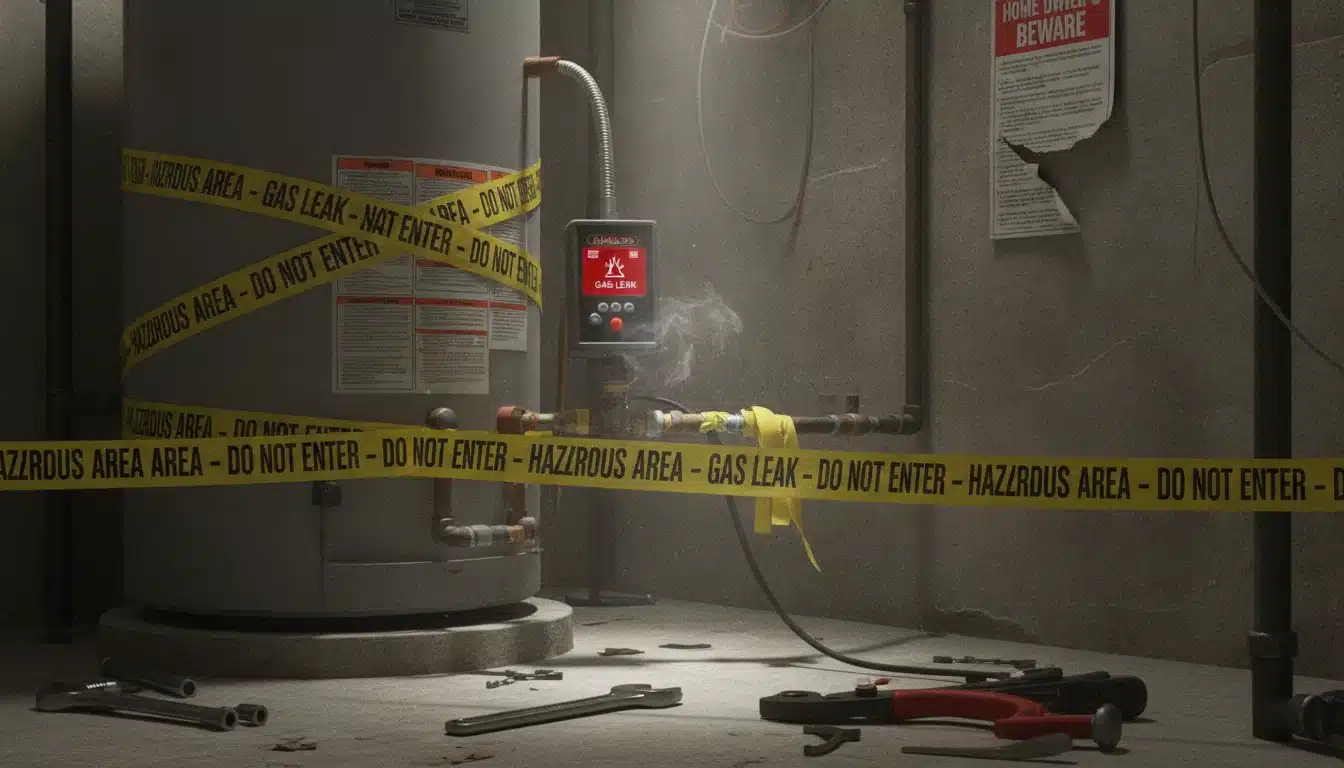
Code, Permits & Warranty Implications
Most municipal codes require permits and inspections for water heater work. Skipping permits risks failed inspections during future sales and could void insurance claims. Many manufacturers require professional installation for warranty validity—DIY installs can immediately void coverage.
Pros & Cons — Quick Comparison
Professional Installation Benefits
- Licensed, insured technicians protecting your home
- Code compliance and permit handling
- Workmanship warranty plus maintained manufacturer warranty
- Faster, safer completion with proper tools and parts
DIY Installation Drawbacks
- Likely voided manufacturer warranty
- No workmanship warranty
- Higher safety and insurance risk
- Time, tool, and potential repair costs that often exceed savings
If you’re unsure whether your project qualifies as a safe DIY, call us for a quick pre-install checklist or to schedule an in-home assessment. We can advise which preparatory tasks you can do, what requires licensed plumbing, and we handle permits and warranty documentation when you choose professional installation.
Not Sure If DIY Is Right for You?
Call for a no-pressure pre-install checklist and get clear guidance on safety, code, and warranty — or schedule a professional heater installation with licensed technicians.
Our Comprehensive Water Heater Services
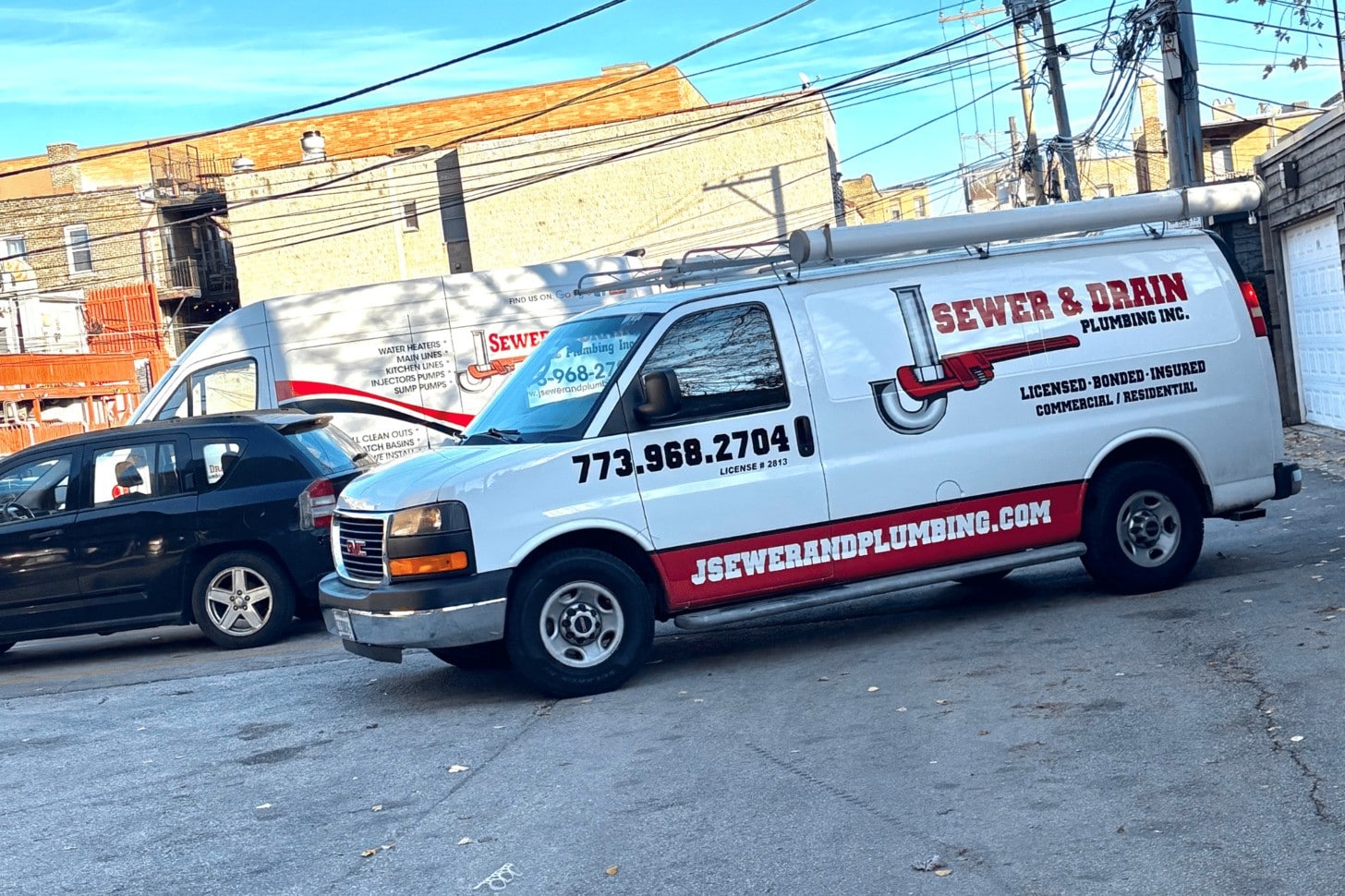
We provide full-service water heater solutions across Chicago and nearby suburbs. As a family-owned plumbing team, we handle everything from new water heater installation to emergency replacement, repairs, and preventive maintenance — with permit handling, warranty paperwork, and clear pricing included.
New Water Heater Installation
Installing a new water heater where none existed requires running supply lines, installing gas or electrical service, and ensuring proper venting and drainage. We handle complete installations for new construction, additions, and point-of-use systems (ideal for remote bathrooms).
Service highlight: we manage permits, coordinate inspections, and provide an itemized installation plan so you know expected costs and timeline.
Water Heater Replacement
When a tank fails or it’s time for an upgrade, we remove the old unit and install a replacement quickly and cleanly. Whether you choose a like-for-like tank replacement or upgrade to a tankless or hybrid system, we advise on sizing and efficiency to meet your household needs.
Priority for emergencies: emergency replacements receive expedited scheduling to restore hot water fast and limit damage from leaks or failures.
Water Heater Repair
Not every problem requires replacement. We repair common issues such as failed heating elements, thermostats, valves, or pilot and ignition problems. For tankless systems, our technicians have the specialized training to diagnose and correct heat-exchanger or control issues.
Repair approach: we diagnose first, then recommend repair vs. replacement based on cost-effectiveness and expected remaining life.
Maintenance and Inspection Services
Preventive maintenance keeps your heater efficient and extends service life. Our annual plans include tank flushing, anode rod inspection and replacement, TPR valve testing, burner cleaning, and safety checks. For tankless units we perform descaling and filter cleaning.
Membership benefit: plan members get priority scheduling and discounted emergency service.
Emergency Water Heater Services
Water heater leaks, gas smells, or complete failures require fast response. We offer 24/7 emergency service and often resolve common emergencies the same day by carrying parts and replacement options on our service vehicles.
If you smell gas: evacuate, call the gas company, then call us. For active leaks, shut off water and power if safe, then contact our emergency line for immediate assistance.
Service Highlights & Options
Same-day or next-day appointments where possible
Permit handling and inspection coordination included
Manufacturer warranty registration and installation documentation provided
Financing and rebate guidance to reduce upfront cost
Point-of-use and secondary heater installations to improve hot water delivery
Example mini-case: a typical tankless conversion for a 3-bedroom home includes an in-home assessment, gas-line sizing, venting modifications, and electrical verification — we provide a clear estimate outlining each component and expected timeline.
Complete Water Heater Solutions
From installation to maintenance, repairs, and emergency response, we keep your hot water flowing reliably year-round. Contact us for a site assessment and an itemized service plan.
Serving Chicago and Surrounding Communities
We proudly serve Chicago and nearby suburbs with professional water heater services. Our multiple local offices enable faster response times for installations, repairs, and emergency calls — and our technicians know local homes, codes, and typical water supply challenges.
Our Chicago Locations
Chicago Main Office: 3343 N Monticello Ave — our primary dispatch center stocking common parts and replacement heaters for rapid service.
Chicago Main Office: 3343 N Monticello Ave, Chicago, IL 60618
Wilmette Office: 809 Ridge Rd — serving the north shore and nearby suburbs like Evanston, Skokie, and Glenview.
Wilmette Office: 809 Ridge Rd, Wilmette, IL 60091
New Chicago Office: 3017 N Elston Ave — improves response times for northwest neighborhoods and expands our service capacity.
New Chicago Office: 3017 N Elston Ave, Chicago, IL 60618
Communities We Serve
Our coverage includes Chicago proper and many surrounding suburbs: Evanston, Skokie, Lincolnwood, Morton Grove, Wilmette, Winnetka, Glencoe, Park Ridge, Des Plaines, Niles, Oak Park, Berwyn, and more. If you’re unsure whether we serve your address, contact us — we continuously expand our service area and can often accommodate nearby locations.
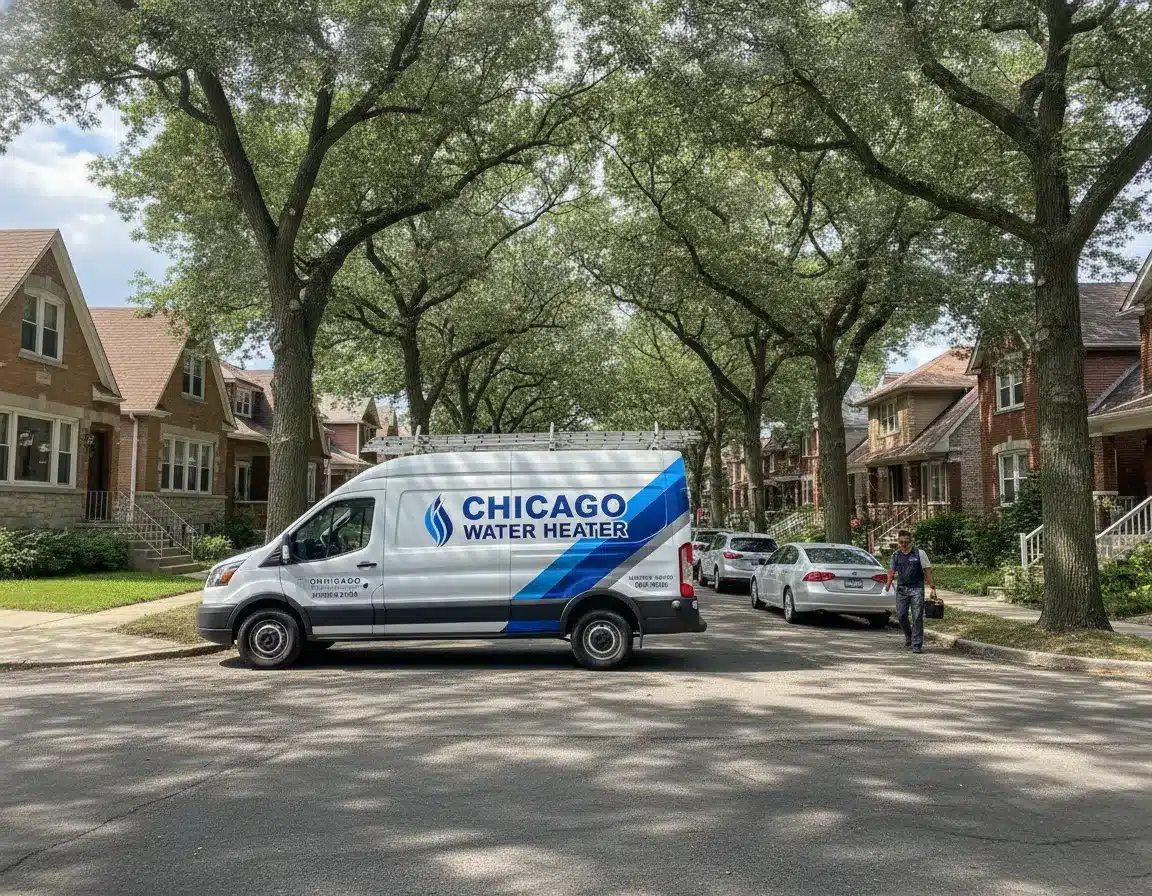
Why Our Location Matters
Local technicians mean faster response for emergencies and quicker arrival for scheduled installations.
We know Chicago-area codes and inspector expectations, which smooths permitting and inspection processes.
Local presence supports faster parts availability and more reliable scheduling for maintenance and repairs.
Schedule service from your nearest location: Call our main line and we’ll dispatch the closest team. For specific office appointments, mention the office name when you call.
24/7 Emergency Water Heater Services
Water heater emergencies happen without warning. For your safety and to protect your home, fast action matters. Our emergency response team is available 24/7 to stop leaks, address gas hazards, and restore hot water quickly.
Immediate Steps If You Have an Emergency
If you smell gas: evacuate the home immediately, call your gas company and 911 if required, then call our emergency line.
Active leak: shut off the cold water supply to the heater and turn off power at the circuit breaker (or close the gas valve) if it’s safe to do so. Place towels or a bucket to limit water spread and call for help.
No hot water: call us — loss of hot water in winter can create unsafe conditions for vulnerable household members.
What Constitutes a Water Heater Emergency
Active leaks, major loss of hot water, gas odors, and unusual noises with visible leaks all require immediate attention. Even small leaks can rapidly cause flooding, mold, and structural damage. Gas odors present life-threatening risk and must be treated as an urgent safety issue.
Our Emergency Response Process
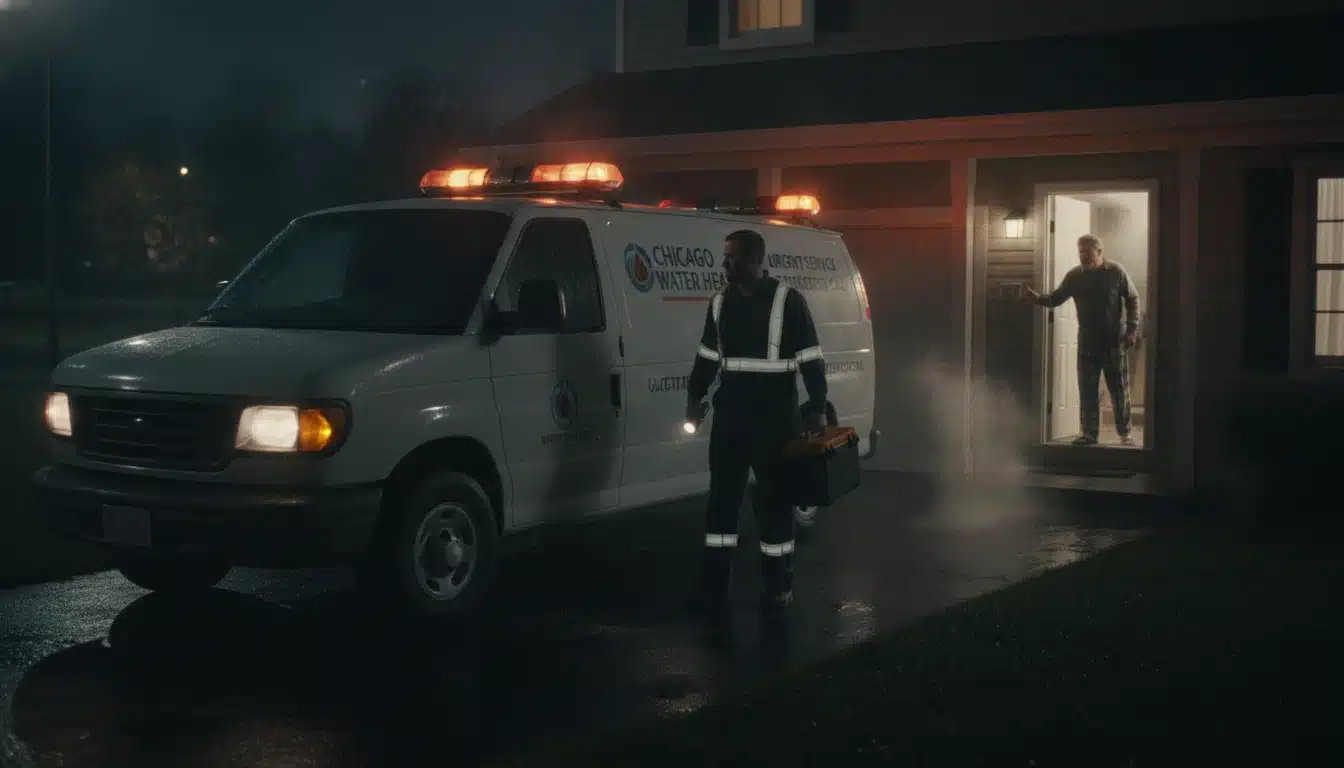
Call our emergency line at (773) 968-2704 any time. Our answering service connects you to an on-call technician who will gather details and dispatch the nearest team with the right parts.
We provide an estimated arrival time and keep you informed en route.
Technicians assess safety first—checking for gas leaks, electrical hazards, and water intrusion—then stabilize the situation.
We carry common parts and replacement options on our trucks and often resolve emergencies the same night; when full replacement is required, we explain options and timelines.
Availability & Response Times
We offer 24/7 emergency coverage every day, including holidays. Response times vary by location and demand; we typically aim to arrive within two hours for most Chicago-area calls. True emergencies receive priority dispatch.
Preventing Emergencies
Regular maintenance dramatically reduces emergency risk. Annual inspections identify worn valves, sediment buildup, and failing components before they become urgent.
Replace aging units before failure—consider proactive replacement at 10–12 years for tank models.
Install a drain pan routed to a safe drain if code requires it for your location.
Use water-leak detectors near the heater to get early alerts and avoid major damage.
Emergency Water Heater Service Available Now
If you’re facing an active leak, smell gas, or have lost hot water, don’t wait. Call our emergency line and we’ll dispatch the nearest technician to secure your home and restore service safely.
Frequently Asked Questions About Water Heater Installation
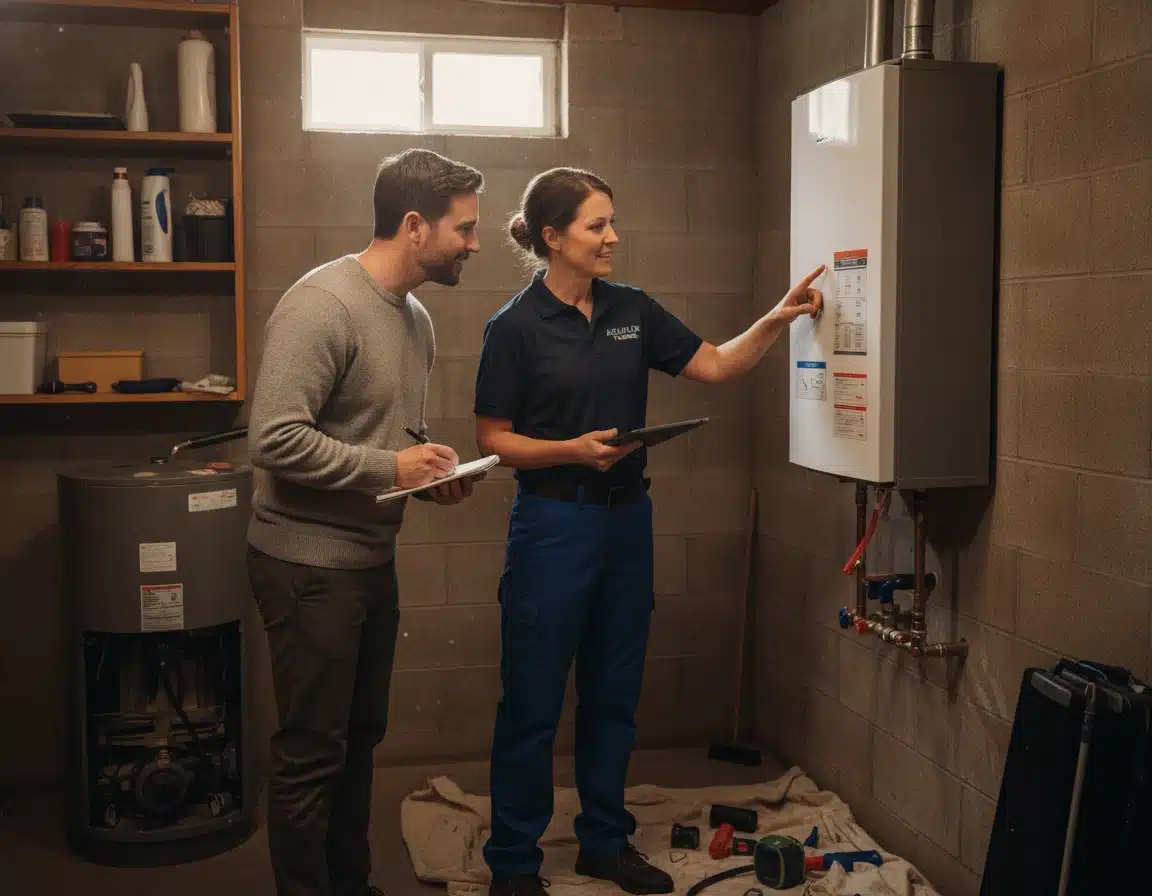
Most installations take about 3–5 hours for a direct tank-to-tank replacement. Tankless or conversion jobs typically need 5–8 hours because they often require gas-line, venting, or electrical upgrades. We give a precise time estimate after the in-home assessment.
Yes — most water heater installations require permits and inspections in Chicago to ensure code compliance. We handle permit applications and inspection coordination as part of our installation service so you don’t have to worry about paperwork.
Sizing depends on household size and peak-hour demand. A family of four often uses a 50-gallon tank; for tankless, add the GPM of fixtures likely to run at once (shower ~2.5 GPM, faucet 1–1.5 GPM). We calculate FHR or flow needs during your consultation.
Typical installed costs range widely: simple tank replacements often fall under $1,000; tankless conversions or complex installs can be $2,000–$5,000 depending on upgrades and permits. We provide transparent, itemized estimates after inspection.
Tank units have lower upfront cost and are simple to replace. Tankless models save energy and space and offer long-term operating savings but cost more initially and may require gas or electrical upgrades. We recommend based on usage, space, and budget.
Tank heaters typically last 10–15 years with proper maintenance; tankless units often reach 20 years or more. Regular flushing, anode rod checks, and scheduled maintenance extend useful life.
While direct replacements are possible for experienced DIYers, gas and electrical work carries real safety risks and may void warranties. Professional installation ensures code compliance, safety, and preserved warranty coverage.
Annual tasks: tank flushing, TPR valve test, anode rod check for tanks; descaling and filter cleaning for tankless units. We offer maintenance plans to keep your heater efficient and reduce emergency risk.
Popping or rumbling usually means sediment buildup; hissing may indicate water on hot surfaces or combustion issues. Schedule an inspection — flushing or repair often resolves the issue before failure occurs.
Shut off the cold water supply to the heater, turn off power at the circuit breaker (or close the gas valve) if safe, and call our emergency line. Even small leaks can cause major damage, so prompt professional response is important.
Shut off the cold water supply to the heater, turn off power at the circuit breaker (or close the gas valve) if safe, and call our emergency line. Even small leaks can cause major damage, so prompt professional response is important.
Yes — utility rebates (ComEd, Peoples Gas) and federal incentives may apply to high-efficiency models. We help identify available rebates and offer financing options to make efficient upgrades more affordable.
Warranty transferability varies by manufacturer. Some warranties transfer to new owners; others don’t. We document installations and register units when required to preserve available protections — ask us about specific models during your estimate.
Why Choose Chicago Water Heater
Choosing the right plumbing partner matters for your home’s comfort and safety. As a family-owned water heater specialist, we combine hands-on expertise with local knowledge to deliver safe, code-compliant installations and dependable service for Chicago homeowners.
Two-Generation Family Expertise
J Sewer & Drain Plumbing launched in 2017 and evolved into Chicago Water Heater, blending two generations of practical plumbing experience with modern heater installation techniques. Our family approach means personal accountability: we treat your home as we would our own.
Community Commitment
We hire locally, support neighborhood events, and reinvest in the Chicago area. Our local presence helps us respond faster and keeps jobs and materials in the community — a benefit to your neighborhood as well as your home.
Treating Every Customer Like Family
We listen, explain options clearly, and avoid high-pressure sales. Expect transparent communication about costs, code requirements, and warranty implications so you can make informed decisions for your home.
Professional Licensing, Insurance & Bonding
All technicians carry the licensing required by Illinois and Chicago, and we maintain comprehensive liability and workers’ compensation insurance. We’re bonded to protect your financial interests if work isn’t completed as agreed. Ask us for license and insurance details for full transparency
Commitment to Excellence
We follow manufacturer installation guidelines and local codes to preserve your warranty and ensure safety. Our teams use quality materials and trusted brands, perform thorough testing, and back workmanship with an installation warranty in addition to manufacturer coverage.
Transparent Pricing & Honest Recommendations
We provide itemized estimates before work begins and explain pros and cons for repair versus replacement options. Sometimes a repair makes sense; sometimes a new, more efficient water heater is the better long-term choice — we’ll give you the facts and let you decide.
Trust Signals & Local Proof
Licensed technicians and up-to-date insurance (request details)
Manufacturer-authorized installers for major heater brands
Local references and community involvement — ask about recent projects in your neighborhood
Workmanship warranty plus manufacturer registration support
Meet Our Team and See the Difference
Call us to request license and insurance information, read local testimonials, or schedule an in-home consultation. We’ll provide a clear plan and an honest recommendation for your water heater needs.
Your Trusted Partner for Water Heater Installation in Chicago
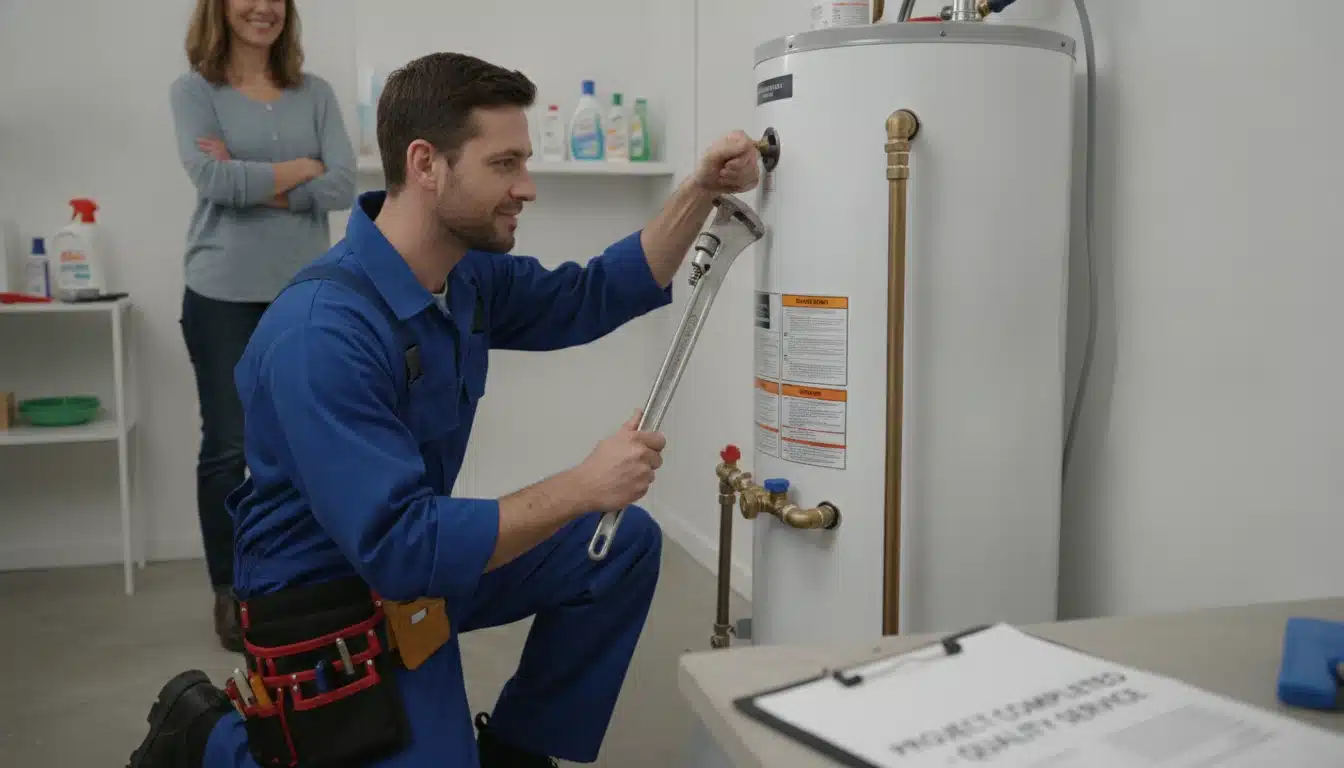
Safe, code-compliant installations with warranty protection and fast local service. Professional water heater installation protects your home, family, and investment — and keeps your manufacturer warranty valid. Our licensed, insured technicians deliver expert installation, permitting, and documentation so your new heater performs reliably for years.
Chicago Water Heater, operated by J Sewer & Drain Plumbing Inc., is a family-owned business serving Chicago and nearby communities since 2017. From the first consultation through installation and ongoing maintenance, we handle every step — sizing, permit handling, electrical or gas upgrades, and final inspection — so you don’t have to worry about surprises.
We cover all water heater types and situations: standard tanks, electric water heaters, tankless conversions, and high-efficiency hybrids. Need emergency help? Our teams respond quickly to restore hot water and limit damage, and we offer planned replacements to avoid emergency premiums.
Schedule Your Water Heater Installation Today
Get a free, itemized estimate or same-day assessment. Call now to book an in-home consultation or emergency service — we’ll provide clear recommendations and transparent pricing.
(773) 968-2704
Visit Our Chicago Locations
Main Chicago Office:
3343 N Monticello Ave
Chicago, IL 60618
Wilmette Office:
809 Ridge Rd
Wilmette, IL 60091
New Chicago Location:
3017 N Elston Ave
Chicago, IL 60618
Hours & Availability
Business Hours:
Monday – Saturday: Regular appointments (call for availability)
Emergency Service:
Available 24/7 — call our emergency line for immediate assistance
Service Area:
Chicago, IL and surrounding communities
Thank you for considering Chicago Water Heater for your water heater installation needs. Contact us today for an honest assessment, clear recommendations, and a transparent quote — and experience the difference professional, family-owned service makes for your home’s hot water.